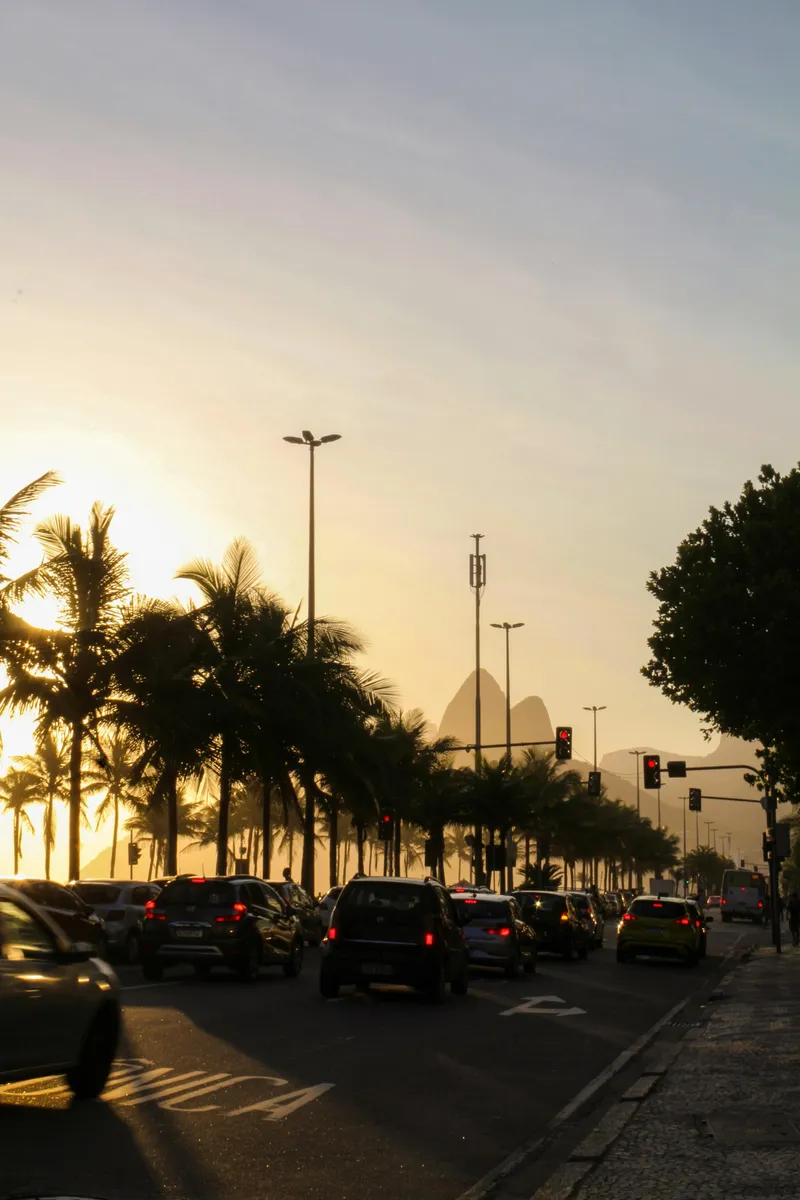
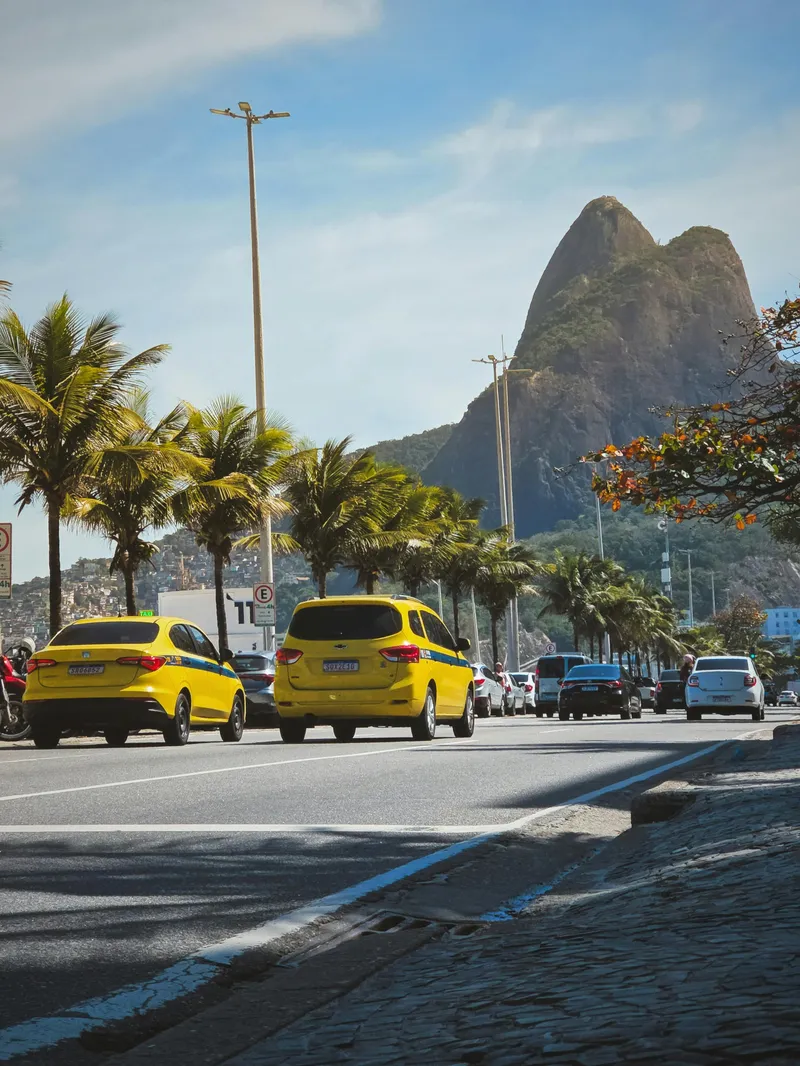
Cinematic view of driving in Rio de Janeiro

Driving in Brazil — License, Rules & What Foreigners Need to Know

Everything foreigners need to know about driving in Rio de Janeiro — from using your foreign license to getting a Brazilian CNH, plus an introduction to getting your pilot license in Brazil.

180 Days Foreign License Validity
R$2,500–4,000 CNH from Scratch
IDP Recommended for All

Driving with a Foreign License in Brazil

If you are visiting Brazil on a tourist visa or have recently arrived on a residency visa, you can legally drive using your foreign license for up to 180 days from your date of entry. This window applies per entry — if you leave and re-enter Brazil, the 180-day clock restarts. This is sufficient for most tourists and short-term visitors, and it is the simplest option for exploring Rio and nearby destinations like Buzios, Angra dos Reis, and Paraty by car.

What You Need to Carry

The International Driving Permit (IDP)

While not always strictly required by law — particularly for licenses from countries that signed the 1968 Vienna Convention on Road Traffic — an IDP is strongly recommended for practical reasons. Police officers at checkpoints (blitz) may not recognize your foreign license, and explaining the legal nuances in Portuguese is not how you want to spend your afternoon. Rental car companies universally require an IDP or sworn translation. Insurance companies may deny claims if you were driving without one.

Obtaining an IDP before you travel is simple and inexpensive:

After 180 Days

Once your 180-day window expires, driving on a foreign license becomes illegal. If you are stopped by police, you face fines for driving without a valid license, potential vehicle seizure, and insurance invalidation. If you plan to stay in Brazil longer than 180 days — whether through a digital nomad visa, investor visa, retirement visa, or any other residency pathway — you need to convert your foreign license to a Brazilian CNH or obtain one from scratch.
Converting Your Foreign License to a Brazilian CNH

If you hold a valid driver's license from your home country and have established residency in Brazil, you can convert it to a Brazilian CNH (Carteira Nacional de Habilitacao) through DETRAN-RJ (Departamento Estadual de Transito do Rio de Janeiro). The conversion process is more streamlined than getting a license from scratch, though it still involves several steps and visits to government offices.

Requirements

The Conversion Process

  1. Register at DETRAN-RJ online — Create an account on the DETRAN-RJ website (detran.rj.gov.br) and start the conversion application (processo de habilitacao estrangeira)
  2. Schedule and complete medical exam (exame medico) — Visit a DETRAN-accredited clinic. The exam checks vision, hearing, and basic physical fitness. Cost: approximately R$200-350
  3. Schedule and complete psychological exam (exame psicotecnico) — A separate appointment at a DETRAN-accredited clinic. Tests cognitive abilities and psychological fitness for driving. Cost: approximately R$200-350
  4. Submit documents at DETRAN — Bring all originals and copies to a DETRAN-RJ office. The main office for foreigners is in Centro. Expect 2-3 hours of waiting
  5. Take the written theory test (prova teorica) — 30 multiple-choice questions covering Brazilian traffic law (Codigo de Transito Brasileiro - CTB). You need 70% (21 correct) to pass. The test is available in Portuguese only. Study the CTB manual provided by DETRAN
  6. Practical driving test — This step may be waived if your home country has a reciprocity agreement with Brazil (see below). If required, you take a practical test at a DETRAN facility
  7. Receive your CNH — After passing all exams, your CNH is issued within 1-3 weeks. It arrives by mail or can be collected at DETRAN

Reciprocity Agreements

Brazil has reciprocity agreements with several countries that allow license conversion without the practical driving test. Countries with full reciprocity include: Portugal, Italy, France, Germany, Belgium, Japan, South Korea, and several others. If your country has a reciprocity agreement, you still need to pass the written theory test and medical/psychological exams, but you skip the practical driving test — a significant time and stress saver.

WARNING — US License Holders: The United States does not have a federal reciprocity agreement with Brazil. Reciprocity for US licenses is handled on a state-by-state basis, and the situation varies. Some US states have established reciprocity with Brazil, while others have not. As of 2026, the status of each state's agreement may have changed. Check directly with DETRAN-RJ for the most current information about your specific US state. You may need to take the full practical driving test even with a valid US license.

Total Cost & Timeline

The complete conversion process typically costs R$1,500-2,500 (approximately $285-475) including DETRAN fees, medical and psychological exams, sworn translation, and test fees. The timeline from start to receiving your CNH is approximately 2-4 months, depending on appointment availability and processing times. Scheduling exams and DETRAN visits can be the biggest source of delays — start the process early rather than waiting until your 180-day foreign license window is about to expire.

Getting a Brazilian CNH from Scratch

If you have never held a driver's license, or if your foreign license has expired and cannot be renewed, you will need to go through the full Brazilian licensing process. This is also required for anyone under 18 who obtained their foreign license (Brazil's minimum driving age is 18). The process is more extensive than conversion but is well-established and thousands of foreigners complete it every year.

Step 1 — Auto-Escola (Driving School)

Brazil requires all first-time license applicants to attend a registered auto-escola (driving school). This is mandatory — you cannot self-study and simply take the tests. Choose an auto-escola that is registered with DETRAN-RJ and ideally one that has experience with foreign students. Some schools in the South Zone, particularly near Copacabana and Botafogo, have instructors accustomed to working with non-Portuguese speakers, though formal instruction is always in Portuguese.

Step 2 — Theory Course (45 Hours)

The mandatory theory course covers 45 hours of classroom instruction across five modules:

Most auto-escolas offer evening and weekend classes to accommodate working schedules. Some now offer hybrid models with partial online instruction, though DETRAN requires a minimum amount of in-person hours. After completing the theory course, you take the written exam at DETRAN — 30 questions, 70% passing score, in Portuguese.

Step 3 — Practical Lessons (25 Hours)

After passing the theory exam, you proceed to 25 hours of practical driving instruction with your auto-escola. These are one-on-one lessons with an instructor in a dual-control vehicle. At least 5 of the 25 hours must be night driving. The instruction covers urban driving, highway basics, parking, and the specific maneuvers tested in the practical exam (baliza — parallel parking in a confined space, and three-point turns).

Step 4 — Practical Driving Exam

The practical exam is conducted at a DETRAN facility by a certified examiner. You drive the auto-escola's vehicle (which you have practiced in) through a set course that includes parallel parking (baliza), three-point turns, hill starts, and a short on-road section. The exam takes approximately 15-20 minutes. Nervousness is the main cause of failure — practice the baliza maneuver extensively, as it is the most common point of failure.

Step 5 — Provisional License (PPD)

Upon passing all exams, you receive a PPD (Permissao Para Dirigir) — a provisional license valid for 1 year. During this probationary period, you must not commit any serious or very serious traffic violations. If you complete the year without major infractions, the PPD automatically converts to a full CNH. If you commit serious violations, you may need to restart portions of the process.

Total Cost

Getting a CNH from scratch costs approximately R$2,500-4,000 ($475-760), broken down as:

The total timeline from enrollment to receiving your PPD is typically 3-6 months.

Driving in Rio de Janeiro — What You Need to Know

Driving in Rio de Janeiro is an experience that ranges from perfectly manageable to genuinely challenging, depending on where and when you drive. The South Zone is compact and many residents never need a car, but if you plan to explore beyond the metro and Uber network — particularly for weekend trips to Buzios, Paraty, or Angra dos Reis — understanding Rio's driving culture is essential.

Red Lights at Night

One of the most important things for foreigners to understand is the informal but widely practiced rule about red lights at night. In many areas of Rio, particularly less central neighborhoods, drivers treat red lights as yield signs after approximately 10 PM. This practice originated as a safety measure to avoid carjackings at isolated intersections after dark. While not officially legal, it is widely understood by local drivers and police. As a foreigner, exercise judgment — in busy, well-lit intersections in the South Zone, follow normal traffic rules. In quieter areas late at night, slow down at red lights, check for cross traffic and pedestrians, and proceed carefully if the intersection is clear. Never blow through a red light at speed.

Lei Seca — Zero Tolerance for Alcohol

CRITICAL: Brazil enforces Lei Seca (Dry Law), a zero-tolerance drunk driving policy. The legal blood alcohol limit is effectively 0.00%. Any detectable alcohol results in an immediate fine of R$2,934.70 (approximately $560), 12-month license suspension, and possible vehicle seizure. Higher blood alcohol levels trigger criminal charges carrying 6 months to 3 years imprisonment. Blitz (checkpoint) operations are frequent in Rio, especially on Friday and Saturday nights near nightlife areas in Leblon, Ipanema, and Lapa. Use Uber or 99 — it is cheap, safe, and eliminates any risk.

Speed Cameras (Radar)

Rio de Janeiro has an extensive network of fixed and mobile speed cameras (radares). They are everywhere — on highways, main avenues, tunnels, and residential streets. Speed limits are strictly enforced by camera, and fines arrive by mail weeks later. Typical speed limits: 40-60 km/h on urban streets, 80-110 km/h on highways. GPS apps like Waze are essential and will alert you to camera locations. Fines for speeding range from R$130 to R$880 depending on severity, with points added to your license.

Motorcycles

Perhaps the biggest driving adjustment for foreigners is the behavior of motorcyclists. In Rio (and all of Brazil), motorcycles routinely lane-split at speed, weave between cars in traffic, and appear seemingly from nowhere. This is legal and normal in Brazil. Always check mirrors before changing lanes, use turn signals early, and leave extra space between vehicles. Motorcycle delivery drivers (motoboys) are particularly aggressive during peak hours.

Parking

Parking in the South Zone is scarce and expensive. Street parking exists but is managed by flanelinhas (informal parking attendants) who expect a tip of R$5-10 for watching your car. Garage parking in Copacabana or Ipanema runs R$15-30/hour. Many apartment buildings in the South Zone do not include parking, or charge R$300-500/month for a garage space. This is one of the key reasons many South Zone expats forgo car ownership entirely — between parking costs, insurance, and IPVA tax, the economics rarely make sense when Uber is $3-5 per ride.

Essential Driving Tips

Buying vs. Renting a Car in Rio

Before committing to car ownership, carefully consider whether you actually need a car in Rio. If you live in the South Zone — which includes Ipanema, Copacabana, Botafogo, Flamengo, Leblon, and surrounding neighborhoods — the combination of metro, Uber/99, cycling, and walking covers virtually all daily needs at a fraction of car ownership costs. Cars become more useful (and arguably necessary) in Barra da Tijuca, Sao Conrado, and other West Zone neighborhoods where distances are greater and public transit is less comprehensive.

Cost of Car Ownership

ExpenseAnnual Cost (Estimate)Notes
IPVA (Vehicle Tax)4% of vehicle valueRio charges 4%. On a R$80,000 car: R$3,200/year
Insurance (seguro)R$2,000–5,000Varies by vehicle, driver profile, neighborhood, and coverage level
Parking (garage)R$3,600–6,000R$300-500/month for a garage spot in the South Zone
FuelR$4,000–8,000Gasoline approximately R$6.00/liter; ethanol R$4.00/liter
MaintenanceR$2,000–4,000Oil changes, tires, inspections, repairs
Licensing & InspectionsR$200–400Annual CRLV renewal and vehicle inspection
Total Annual Cost R$15,000–27,400 $2,860–5,220/year — before depreciation

When Renting Makes Sense

For weekend trips and occasional needs, renting is almost always more economical than owning. Rental rates in Rio start at approximately R$100-180/day ($19-34) for a basic compact car from agencies like Localiza, Movida, or Unidas. For longer rentals, monthly rates of R$2,500-4,000 ($475-760) are available. If you only need a car 4-6 weekends per year for trips to Buzios, Angra dos Reis, or Paraty, renting costs a fraction of annual ownership.

Buying Tips

If you do decide to buy, the used car market in Brazil operates through a combination of dealerships (concessionarias), private sales (OLX, Webmotors, iCarros), and authorized resellers. Always conduct a vehicle history check through DETRAN (consulta de veiculos) to verify there are no liens, fines, or theft records. Have a trusted mechanic inspect the vehicle before purchase. Transfer of ownership must be registered at DETRAN within 30 days. Note that import taxes make foreign cars significantly more expensive in Brazil — locally manufactured brands (Fiat, Volkswagen, Chevrolet, Hyundai) offer better value.

Getting a Pilot License in Brazil

For those with an interest in aviation, Brazil offers an accessible and relatively affordable path to earning a private pilot license (PP — Piloto Privado). With some of the most scenic flying in the world — from the Christ the Redeemer approach over Guanabara Bay to coastal flights along the Green Coast toward Angra dos Reis and Paraty — learning to fly in Rio is a genuinely extraordinary experience.

ANAC — Brazil's Aviation Authority

All aviation licensing in Brazil is governed by ANAC (Agencia Nacional de Aviacao Civil), the equivalent of the FAA in the United States or the CAA in the United Kingdom. ANAC sets the requirements for all pilot certificates, from private pilot (PP) through airline transport (PLA). Foreign nationals with valid Brazilian residency can pursue any ANAC certificate.

Private Pilot License (PP) Requirements

Total Cost

The complete PP license in Brazil costs approximately R$30,000-50,000 ($5,700-9,500), with flight training being the dominant expense. This is significantly less than the $10,000-15,000 typical in the United States, making Brazil an attractive place to learn to fly, especially if you are already living here. Monthly payment plans are available at most aeroclubes.

Converting an FAA License

If you already hold an FAA private pilot license (or equivalent from another ICAO member state), you can validate it through ANAC rather than starting from scratch. The validation process requires:

The validation process typically costs R$5,000-10,000 and takes 2-4 months, including exam preparation and scheduling. This is a much faster and cheaper path if you already have flight experience.

Flying in Rio

Rio de Janeiro has several general aviation facilities. Aeroclube do Brasil at Jacarepagua Airport (SBJR) in the West Zone is the main general aviation hub for the metro area and the most popular flight school. The approach and departure procedures over Rio's terrain — mountains, coastline, and the iconic urban landscape — make it one of the most visually stunning places to fly anywhere in the world. Popular recreational flights include coastal runs to Buzios, island hops to Ilha Grande, and scenic tours over the South Zone beaches, Christ the Redeemer, and Sugarloaf Mountain.

Aviation regulations change periodically. This information reflects April 2026 ANAC requirements. Always verify current requirements directly with ANAC (anac.gov.br) or your chosen flight school before committing to a training program.

Frequently Asked Questions

Can I drive in Brazil with my foreign license?

Yes, for up to 180 days from your date of entry into Brazil. You must carry your valid foreign license, your passport (with entry stamp), and either an International Driving Permit (IDP) or a sworn Portuguese translation of your license. After 180 days, you must convert to a Brazilian CNH to continue driving legally. The 180-day clock resets each time you re-enter Brazil.

Do I need an International Driving Permit (IDP) in Brazil?

An IDP is strongly recommended even though it may not be strictly required in all cases. Police officers at checkpoints, rental car companies, and insurance providers routinely ask for one. Getting an IDP is inexpensive — approximately $20-30 through AAA in the US or equivalent organizations in other countries — and it prevents complications. The alternative is a sworn Portuguese translation of your license, which costs more and takes longer to obtain.

How do I convert my foreign license to a Brazilian CNH?

The conversion process at DETRAN-RJ involves: obtaining your CPF, providing a sworn translation of your license, passing medical and psychological exams, and taking a written theory test on Brazilian traffic law. If your home country has a reciprocity agreement with Brazil, you may skip the practical driving test. Total cost is approximately R$1,500-2,500 ($285-475) and the process takes 2-4 months. You must hold valid residency — tourist visa holders cannot convert.

How much does it cost to get a Brazilian drivers license?

Converting a foreign license: R$1,500-2,500 ($285-475). Getting a CNH from scratch: R$2,500-4,000 ($475-760), including auto-escola (driving school) with mandatory 45 hours of theory and 25 hours of practical lessons, plus DETRAN fees and medical exams. These costs are significantly lower than licensing in most Western countries.

What is the zero tolerance drunk driving law in Brazil?

Brazil's Lei Seca (Dry Law) imposes zero tolerance for drinking and driving. Any detectable blood alcohol results in a R$2,934.70 fine, 12-month license suspension, and possible vehicle seizure. Higher alcohol levels trigger criminal charges with potential imprisonment of 6 months to 3 years. Blitz (checkpoint) operations are frequent in Rio, especially on weekend nights. Use Uber or 99 — rides are affordable and eliminate all risk.

Is it safe to drive in Rio de Janeiro?

Driving in Rio is manageable for experienced drivers but requires adaptation. Key challenges include aggressive motorcycle lane-splitting, the informal night-time red light practice, frequent speed cameras, and limited parking in the South Zone. GPS navigation (Waze) is essential. Many expats find that the metro, Uber, and cycling cover all their needs in the South Zone, making car ownership unnecessary. See our Cost of Living guide for a transport cost comparison.

Can I get a pilot license in Brazil?

Yes. Brazil's ANAC issues private pilot licenses (PP) to foreigners with valid residency. Requirements include ground school (150 hours theory), flight training (minimum 35 hours), medical exam (CMA), and written and practical exams. Total cost is R$30,000-50,000 ($5,700-9,500). If you already hold an FAA or other ICAO-recognized license, you can validate it through ANAC for R$5,000-10,000 with a written exam and check ride.

Should I buy or rent a car in Rio?

For most South Zone expats, car ownership is unnecessary and uneconomical. Annual ownership costs (IPVA 4%, insurance, parking, fuel, maintenance) run R$15,000-27,400 ($2,860-5,220). Renting for weekend trips costs R$100-180/day. If you only need a car 4-6 weekends per year for trips to Buzios or Angra dos Reis, renting saves thousands annually. Car ownership becomes more practical in Barra da Tijuca and other West Zone neighborhoods where public transit is limited.

Continue Your Research